
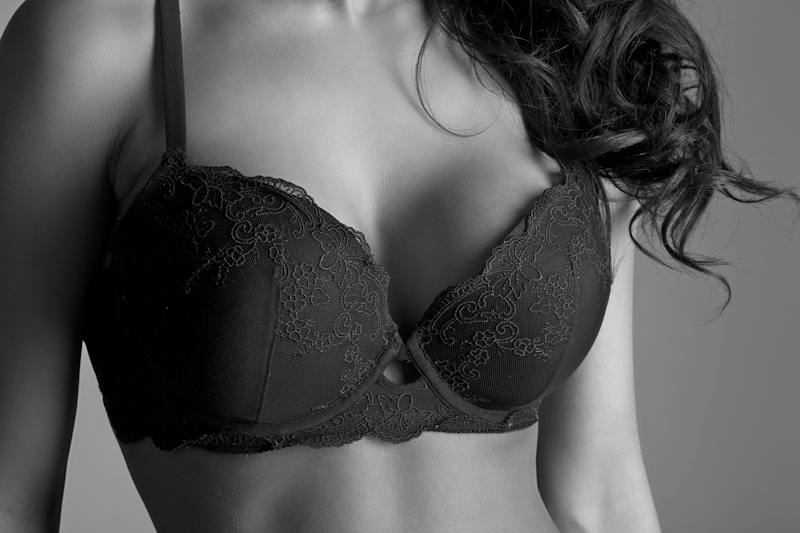
Fat transfer can make the breasts bigger without implants, although the change is modest. According to Duke Health, natural breast augmentation may suit women who want to go up about one cup size at most. At Refine Facial Plastic Surgery and Aesthetics, fat transfer breast augmentation in Nashville is performed by Dr. Kyle S. Gabrick, a plastic surgeon trained through Vanderbilt University Medical Center's integrated plastic surgery residency and a post-doctoral fellowship at Yale University.
Dr. Gabrick has authored more than 40 peer-reviewed publications and textbook chapters, serves as an associate editor for Annals of Plastic Surgery, and holds special expertise in ultrasound-guided fat transfer and revisionary breast surgery. This guide explains how the procedure works, who tends to qualify, how much size patients can realistically gain, and how fat grafting compares with implants.
What Is Fat Transfer Breast Augmentation?
Fat transfer breast augmentation is a procedure that moves a patient's own fat from one area of the body into the breasts to add volume and refine shape. Surgeons also call it autologous fat grafting, and patients often search for it as natural breast augmentation or breast augmentation without implants.
The procedure happens in three stages:
- Harvesting:Liposuction gently removes fat from donor areas such as the abdomen, flanks, back, or thighs.
- Processing: The collected fat is purified to separate viable fat cells from fluid and damaged tissue.
- Grafting: Small amounts of fat are placed in layers throughout the breast so each deposit can connect with a new blood supply.
Because the donor areas are contoured along the way, many patients see a slimmer waist or smoother thighs in addition to fuller breasts. Dr. Gabrick's background in ultrasound-guided fat transfer, including FigurePlasty (often called a Skinny BBL), reflects a close focus on precise, deliberate fat placement. Learn more on Refine's dedicated breast augmentation with fat transfer page.
Fat Transfer vs. Implants: Which Is Right for You?
For most women, the choice comes down to goals: fat transfer generally suits a subtle, natural-feeling increase with added body contouring, while implants suit women who want a larger or more predictable change in size. The table below compares the two approaches on the factors patients ask about most.
|
Factor |
Fat Transfer |
Breast Implants |
|
Material |
Patient's own fat |
Saline or silicone gel device |
|
Typical size increase |
Up to about one cup per session |
Wide range, chosen before surgery |
|
Predictability |
Varies with how much fat survives |
More predictable volume |
|
Incisions |
Tiny liposuction and injection sites |
Incision under the breast, around the areola, or in the armpit |
|
Body contouring |
Included through liposuction |
Not included |
|
Device-related risks |
None, since no device is placed |
Capsular contracture, rupture or deflation, BIA-ALCL |
|
Number of procedures |
Often more than one session |
Usually one initial surgery |
The U.S. Food and Drug Administration lists capsular contracture, rupture and deflation, breast implant-associated anaplastic large cell lymphoma (BIA-ALCL), and additional surgeries with or without implant removal among the known risks of breast implants. For women weighing those concerns, fat grafting removes the device from the equation entirely, though it carries its own considerations covered below.
Some patients benefit from a combination. Duke Health notes that fat can be added alongside an implant, or that existing implants can be removed and the breast contours smoothed with fat. Refine offers implant exchange and removal and breast augmentation with implants, so patients exploring breast augmentation in Nashville can review every option in one consultation. A full overview is available on Refine's breast procedures page.
Am I a Candidate for Natural Breast Augmentation?
Good candidates for natural breast augmentation are typically healthy nonsmokers who have enough donor fat and want a modest increase in breast size. Dr. Gabrick evaluates each of the following during a consultation:
- Donor fat availability: Enough fat in areas such as the abdomen, flanks, or thighs to graft meaningful volume.
- Size goals: A desired change of roughly one cup or less per session.
- Overall health: No uncontrolled medical conditions, and no smoking or nicotine use, which can reduce graft survival.
- Weight stability: A steady weight, since grafted fat can grow or shrink with weight changes.
- Breast position: Mild or no sagging. Moderate to significant sagging may call for a breast lift with augmentation, because added volume alone does not lift the breast.
Very lean patients sometimes lack sufficient donor fat, and those patients may find implants or a hybrid approach a better match. Personal and family history of breast cancer, along with mammogram timing, is also part of the conversation so every patient can make an informed choice.
What Breast Augmentation Sizes Can Fat Transfer Achieve?
Fat transfer can typically achieve an increase of up to about one cup size per session. The breast can only accept a limited amount of fat at once, because each graft needs surrounding tissue and blood flow to survive.
Not all transferred fat remains. A systematic review of cosmetic breast fat grafting found a mean volume retention of 62.4%, with individual studies ranging from 44.7% to 82.6%. A later review in Plastic and Reconstructive Surgery reported an average retention of 58%. In practical terms, the fullness seen in the first weeks includes swelling and fat the body will gradually reabsorb.
Women hoping for more than one cup can consider staged sessions. Duke Health reports that two procedures are needed on average to reach a patient's goal, spaced several months apart so the first grafts can settle.
Recovery and What to Expect After Fat Transfer Breast Augmentation
Recovery after fat transfer breast augmentation involves healing in two places: the donor areas and the breasts. Soreness, bruising, and swelling are common early on, and compression garments are usually worn over the liposuction sites.
Patients should expect a gradual timeline:
- First week: Rest, light walking, and avoiding pressure on the breasts, including sleeping face down.
- Following weeks: Swelling eases, and many patients return to desk work and routine activity as cleared by Dr. Gabrick.
- Three to six months: Retained fat stabilizes. Duke Health notes that final shape can take six months or longer to appear.
Refine's concierge team supports patients throughout the process. Each patient receives a next-day check-in and a personal cell phone number to reach the physician directly, and overnight care from a specialized assistant or nurse can be arranged. Out-of-town patients can recover in Mt. Juliet, a quiet community a short drive from downtown Nashville, with travel and accommodations coordinated by the team.
Fat Transfer Breast Augmentation Before and After Results
Before and after results from fat transfer breast augmentation tend to show a soft, proportional increase in fullness rather than a dramatic change in size. Because the new volume is the patient's own tissue, the breasts may look and feel natural to the touch. The systematic review cited above reported a 92% satisfaction rate among patients.
When comparing before and after photos, a few details help set realistic expectations:
- Photos taken at least six months after surgery reflect retained volume more accurately than early photos
- Patients with a similar starting breast size and frame offer the most useful comparison
- Images of the donor areas show the added contouring benefit that implants cannot provide
FAQs
What is fat transfer breast augmentation and how is it different from implants?
Fat transfer breast augmentation uses liposuction to collect a patient's own fat and inject it into the breasts. Implants rely on a saline or silicone device placed through a single incision. Fat grafting offers a subtler increase plus body contouring, while implants can deliver a larger, more predictable size change.
Who is a good candidate for natural breast augmentation with fat transfer?
Ideal candidates are generally healthy nonsmokers at a stable weight with enough donor fat and a goal of about one cup or less. Women with significant sagging may need a breast lift in addition to, or instead of, fat transfer.
How much does fat transfer breast augmentation cost compared to implants?
Cost varies based on the number of donor areas, the volume grafted, anesthesia, facility fees, and whether more than one session is needed. Duke Health notes that multiple sessions can make natural augmentation more expensive than implants. Refine provides a personalized estimate after a consultation with Dr. Gabrick.
How long do fat transfer breast augmentation results last?
Fat that survives the first few months generally behaves like other fat in the body, so results can be long-lasting. Significant weight gain or loss, pregnancy, and natural aging may still change breast size and shape over time.
Can fat transfer breast augmentation achieve a full cup size increase?
Many patients can gain up to about one cup size in a single session, depending on donor fat, skin elasticity, and how much of the graft survives. A larger increase may require a second session or a combined approach with implants.
Is fat transfer breast augmentation safer than implants?
Fat transfer avoids device-specific risks such as capsular contracture, rupture, and BIA-ALCL, but it is not free of risk. The review in Plastic and Reconstructive Surgery identified fat necrosis and calcification as the most common imaging changes, and other possible concerns include oil cysts, asymmetry, and fat reabsorption. Dr. Gabrick reviews the full risk profile of each option so patients can decide which trade-offs they prefer.
Will fat transfer breast augmentation look and feel natural?
Results can look and feel natural because the added volume is living tissue integrated into the breast. The change is typically subtle, making this approach well suited to women who prefer discretion over a dramatic transformation.
Schedule Your Nashville Breast Augmentation Consultation at Refine Surgery
Every breast augmentation journey starts with an honest conversation about goals, anatomy, and the realistic range of outcomes. Dr. Gabrick combines Yale and Vanderbilt training, research published in more than 40+ peer-reviewed works, and experience at a high-volume destination practice to help each patient choose between fat transfer, implants, or a hybrid plan.
Patients interested in breast augmentation in Nashville or anywhere in Middle Tennessee can request a consultation online today.
This information is provided for educational purposes only and does not replace a consultation with a qualified plastic surgeon. Outcomes, risks, and suitability vary from patient to patient.
Sources
- Duke Health. Fat Transfer Breast Augmentation.
- U.S. Food and Drug Administration. Risks and Complications of Breast Implants.
- Groen et al. Autologous Fat Grafting in Cosmetic Breast Augmentation: A Systematic Review on Radiological Safety, Complications, Volume Retention, and Patient/Surgeon Satisfaction.
- Seth et al. Autologous Fat Grafting in Breast Augmentation: A Systematic Review Highlighting the Need for Clinical Caution. Plastic and Reconstructive Surgery.