
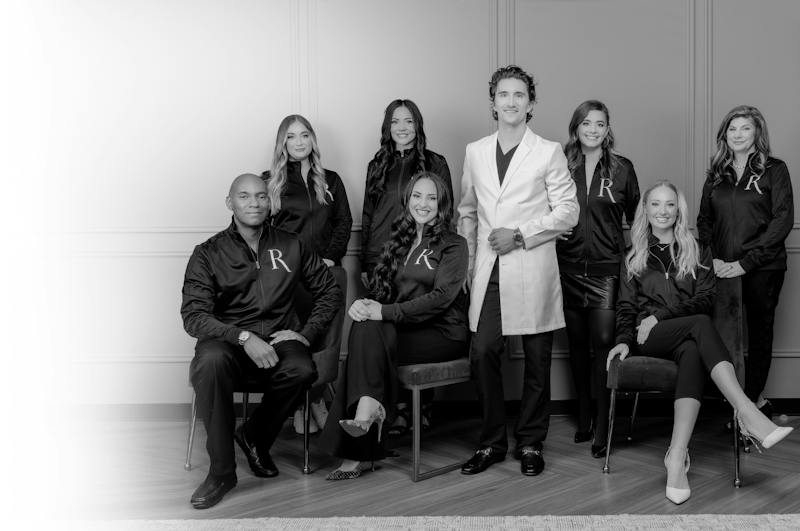
The right surgeon for facial plastic surgery holds board certification in a relevant specialty, has advanced training focused on the face, and can show consistent, natural-looking results in the exact procedure a patient wants. Honest communication matters just as much. A surgeon who explains limits, suggests less when less is enough, and never pressures a decision is usually the one whose work looks the least "done."
At Refine Facial Plastic Surgery and Aesthetics, Dr. Lucas Bryant is a dual board-certified, fellowship-trained facial plastic surgeon in Nashville who built his practice around that standard. This guide draws on his training and philosophy to walk through credentials, fellowship training, before-and-after photos, red flags, and the questions worth asking before booking.
Why Does Choosing the Right Facial Plastic Surgeon Matter?
Choosing the right facial plastic surgeon matters because the face leaves very little room for error. Small differences in technique can change how a nose breathes, how a smile moves, or whether a facelift looks refreshed rather than pulled. Revision surgery is also typically more complex than a first procedure, so getting it right the first time protects both results and recovery.
A strong candidate for the job should meet several baseline criteria:
- Board certification in facial plastic surgery, otolaryngology (head and neck surgery), or plastic surgery
- Fellowship training or a practice that focuses heavily on the face and neck
- A large, procedure-specific portfolio of before-and-after photos
- Surgery performed in an accredited facility or under appropriate in-office anesthesia protocols
- A consultation process built on listening, not selling
Scope also counts. The facial plastic surgery procedures at Refine range from rhinoplasty and eyelid surgery to deep plane facelifts and facial reconstruction, which gives a sense of how broad a dedicated facial specialist's daily work tends to be.
ABFPRS vs. ABPS: What Does Board Certification Mean for Facial Procedures?
Board certification means a surgeon has completed accredited residency training and passed rigorous examinations in a specialty. For facial work, three boards are most relevant, and each signals a slightly different training path.
|
Board |
What It Certifies |
Facial Focus |
|
American Board of Otolaryngology (Head and Neck Surgery) |
Surgery of the ear, nose, throat, head, and neck |
Head and neck anatomy is the core of training |
|
American Board of Plastic Surgery (ABPS) |
Cosmetic and reconstructive surgery of the entire body |
Face is one area among breast, body, and extremities |
|
American Board of Facial Plastic and Reconstructive Surgery (ABFPRS) |
Facial plastic and reconstructive surgery specifically |
Face, head, and neck exclusively |
ABFPRS certification sits on top of a primary board. According to the American Board of Facial Plastic and Reconstructive Surgery, certified surgeons must already hold certification in otolaryngology or plastic surgery, pass a two-day exam, and submit operative reports from at least 100 facial plastic surgeries for peer review. Because of that layered requirement, ABFPRS diplomates are "double boarded" by definition.
Dr. Bryant holds dual board certification in facial plastic surgery and otolaryngology (head and neck surgery). His colleague, Dr. Kyle S. Gabrick, followed the other major route: a fully integrated plastic surgery residency at Vanderbilt University Medical Center, where he trained in cosmetic and reconstructive surgery of the face, breast, and body. Patients can verify any surgeon's primary board status through the American Board of Medical Specialties at Certification Matters.
What Does Fellowship Training Say About a Surgeon's Facial Specialization?
Fellowship training is an additional year (or more) of focused, post-residency education in a narrower area. For facial plastic surgery, a fellowship signals that a surgeon chose to spend extra time refining techniques such as rhinoplasty, facelift, and eyelid surgery under the guidance of established experts.
During his fellowship, Dr. Bryant received the Orlando Roe award, the only fellowship award the American Academy of Facial Plastic and Reconstructive Surgery gave that year, recognizing the most outstanding clinical research project. His research on minimizing facelift risks later informed his own deep plane technique, and he was selected as U.S. faculty for an international academy's inaugural cadaver training program in deep plane facelift surgery. More detail on his background is available on Dr. Bryant's profile.
Research depth is another useful signal. Dr. Gabrick completed a post-doctoral fellowship at Yale University with studies in rhinoplasty and craniofacial surgery, has authored more than 40 peer-reviewed publications and textbook chapters, and serves as an associate editor for Annals of Plastic Surgery. His full profile and curriculum vitae show what a transparent, detailed training record looks like.
How Can Patients Evaluate Before-and-After Photos for Natural-Looking Results?
Before-and-after photos are most useful when patients study them for consistency, not just for the single best result. A surgeon who produces natural-looking outcomes will show a gallery where patients still look like themselves, only rested and balanced.
When reviewing a gallery, look for:
- Matching conditions: The same lighting, angle, and expression in both photos.
- Multiple views: Front, profile, and three-quarter angles for every patient.
- Similar anatomy: Patients whose age, skin type, and starting concerns resemble yours.
- Telltale signs: A wind-swept look after a facelift, a pinched or scooped nasal tip, or eyes that appear hollow after blepharoplasty.
- Healed results: Photos taken months after surgery, once swelling has fully settled.
Procedure type shapes what "natural" should look like. A deep plane facelift and a mini facelift produce different degrees of change, so reading about the different types of facelifts helps set realistic expectations. Rhinoplasty is especially technique-sensitive; strong rhinoplasty galleries show noses that fit the rest of the face and look as though they have always been there.
What Red Flags Should Patients Watch for at a Plastic Surgery Clinic?
Red flags at a plastic surgery clinic usually show up in how a practice sells, not in how it looks. Polished waiting rooms and heavy social media followings say little about surgical judgment.
Be cautious if a practice:
- Cannot clearly name the surgeon's board certification or deflects the question
- Pushes add-on procedures or same-day deposits
- Shows few photos for the procedure you want, or only one flattering angle
- Offers prices far below the regional average without explaining why
- Rushes the consultation or has a staff member, rather than the surgeon, create the surgical plan
- Guarantees a specific result
High-stakes surgeries like a facelift deserve extra scrutiny here. Dr. Bryant has stated that Refine declines to treat some patients, or recommends a smaller treatment than they first requested, when that better serves the patient's goals. Hearing "you may not need that" during a consultation is often a sign of integrity.
What Questions Should Patients Ask a Facial Plastic Surgeon Before Committing?
Patients should ask questions that reveal training, experience with the specific procedure, safety protocols, and how complications are handled. Bringing a written list to the consultation keeps the conversation focused.
- Which board or boards certify you, and did you complete a facial plastic surgery fellowship?
- How many of this exact procedure do you perform each year?
- Can I see before-and-after photos of patients with features similar to mine?
- Where will the surgery take place, and what type of anesthesia will be used?
- Who will be involved in my care on the day of surgery?
- What does recovery realistically look like, and how will you stay in contact afterward?
- How do you handle complications or results that need adjustment?
- Is there a less invasive option that could meet my goals?
Refine's consultations include photographic simulation with morphing, which lets patients see a projected change before anything becomes permanent. After surgery, patients receive a direct cell phone number to reach their physician, along with a next-day check-in from the team.
How Should Revision Patients Choose a Facial Plastic Surgeon?
Revision patients should look for a surgeon with specific, documented experience correcting prior work, since scar tissue and altered anatomy make secondary surgery more demanding. Ask how many revision cases the surgeon performs, request revision-specific photos, and ask whether cartilage grafting or other reconstructive techniques may be needed.
Reconstructive training carries real weight in these cases. Dr. Bryant regularly performs complex reconstruction, including cleft lip and palate repair that often involves revision rhinoplasty with cartilage grafting, and he volunteers on surgical mission trips treating trauma and congenital differences. That background can help when earlier surgery has left structural or functional problems.
FAQs
What is the difference between a facial plastic surgeon and a general plastic surgeon?
A facial plastic surgeon concentrates on the face, head, and neck, often after residency training in otolaryngology. A general plastic surgeon trains across the whole body, including breast and body contouring, and may or may not focus on facial work in practice.
What board certifications should a facial plastic surgeon have?
Look for certification from the American Board of Facial Plastic and Reconstructive Surgery, the American Board of Otolaryngology, or the American Board of Plastic Surgery. ABFPRS certification requires one of the primary boards first. The ABFPRS itself notes that certification is only one factor in selecting a surgeon.
What questions should I ask a facial plastic surgeon during a consultation?
Focus on credentials, annual volume for your procedure, photos of similar patients, the surgical setting, anesthesia, recovery support, and how revisions are handled. Asking whether a less invasive option exists can also reveal how conservative a surgeon's approach is.
How do I know if a facial plastic surgeon is right for my specific procedure?
A good fit shows a deep portfolio in your exact procedure, explains the reasoning behind a recommended technique, and listens to your goals before offering a plan. Feeling heard and unhurried during the consultation is a meaningful signal.
What training and experience should I look for in a facial plastic surgeon?
Ideal training includes an accredited residency, board certification, and fellowship or equivalent focused experience in facial surgery. Published research, teaching appointments, and years of procedure-specific practice add further depth. Both Dr. Bryant and Dr. Gabrick hold appointments as Clinical Assistant Professors at the Thomas F. Frist, Jr. College of Medicine at Belmont University.
How much does facial plastic surgery typically cost, and does insurance cover it?
Cost depends on the procedure, technique, anesthesia, and facility, so an accurate figure usually requires a consultation. Cosmetic surgery is generally not covered by insurance. Procedures that correct function, such as septoplasty for obstructed breathing, may be covered when deemed medically necessary.
What are the red flags to avoid when choosing a facial plastic surgeon?
Common warning signs include vague credentials, high-pressure sales tactics, limited before-and-after photos, unusually low pricing, and promises of guaranteed results. A surgeon who never suggests doing less may not have your long-term interests in mind.
Schedule Your Consultation With a Facial Plastic Surgeon in Nashville
Every criterion in this guide points back to the same foundation: training, specialization, transparency, and honesty. Dr. Bryant brings dual board certification, fellowship training, award-winning facelift research, and recognition as a Castle Connolly Top Doctor to every consultation, and many of his procedures can be performed in-office under local anesthesia.
Patients from across Middle Tennessee, and many who travel to Nashville from out of state, visit Refine's Nashville and Mt. Juliet locations to meet with a facial plastic surgeon in Nashville who takes time to listen. For those exploring a lighter first step, the mini facelift is one option worth discussing. Request a consultation today to begin.
This information is provided for educational purposes only and does not replace a consultation with a board-certified surgeon. Outcomes, risks, and suitability vary from patient to patient.
Sources
- American Board of Facial Plastic and Reconstructive Surgery. What ABFPRS Certification Means
- American Board of Facial Plastic and Reconstructive Surgery. ABFPRS Certified Diplomates
- American Board of Medical Specialties. Certification Matters
- Mayo Clinic. Facial Plastic and Reconstructive Surgery Overview